
Reflection, Relationships and Retrieval: Junior School and a Remarkable Term
The term “reflection”, by definition, involves serious and careful consideration of an idea, past event or action. In these first few days of non-term time, it seems appropriate to reflect on the past ten weeks: our successes, our challenges, what we have learned, and how these experiences might influence and guide the Junior School for the remainder of 2026.
When I think back on the successful moments of the term, the final few days stand out. They were highlighted by the College’s High Performance Week and the final days of schooling for our Year 12 students. Both are highly significant occasions for the Junior School and for our broader learning community.
Whether it is the Junior Secondary Showcase, Senior Showcase, Starburst or Dance+, I have the opportunity to witness the skills, development and rewards that come from learning, commitment and practice. More importantly, I see the development that occurs over time when young people are given opportunities, encouragement and the chance to persist. I am extremely fortunate to watch these performances, either from the theatre or from side of stage, and each year I see skills and confidence grow in ways that few schools have the opportunity to provide.
On Sunday evening, it was a privilege to introduce our graduating Year 6 students to the gathered community of parents and Year 12 graduates. Sharing a little of their story thus far was made even more meaningful by hearing about the achievements of our Year 12 students, their aspirations for the future, and their appreciation for the guidance and support they have received along the way. Nine of this year’s Year 12 graduates began their journey through the Junior School, and having had the opportunity to watch their growth over many years was inspiring.
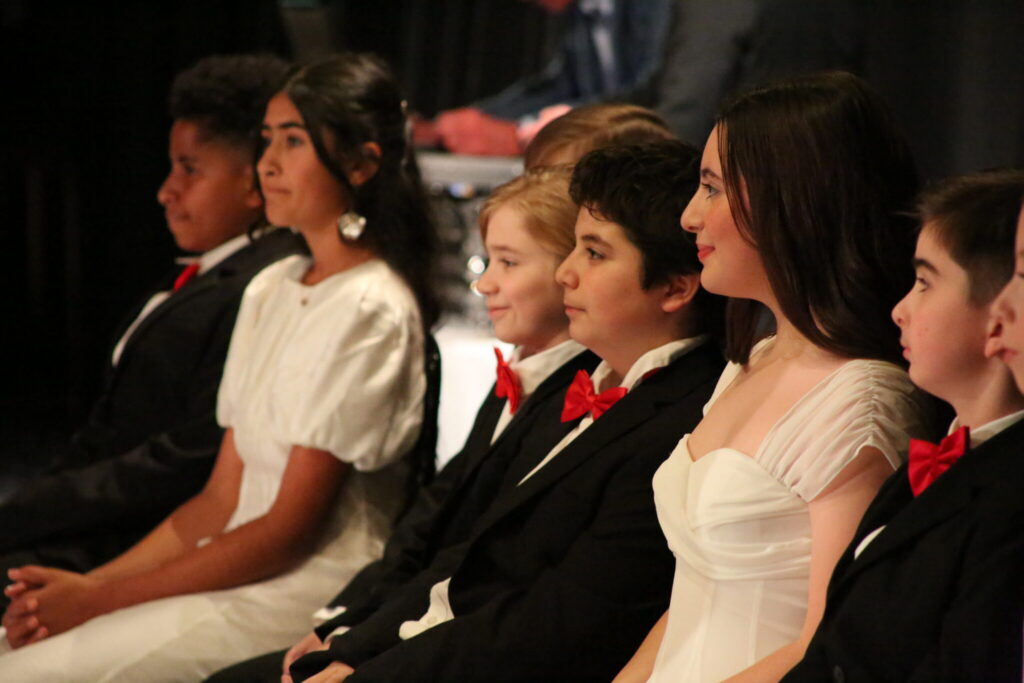
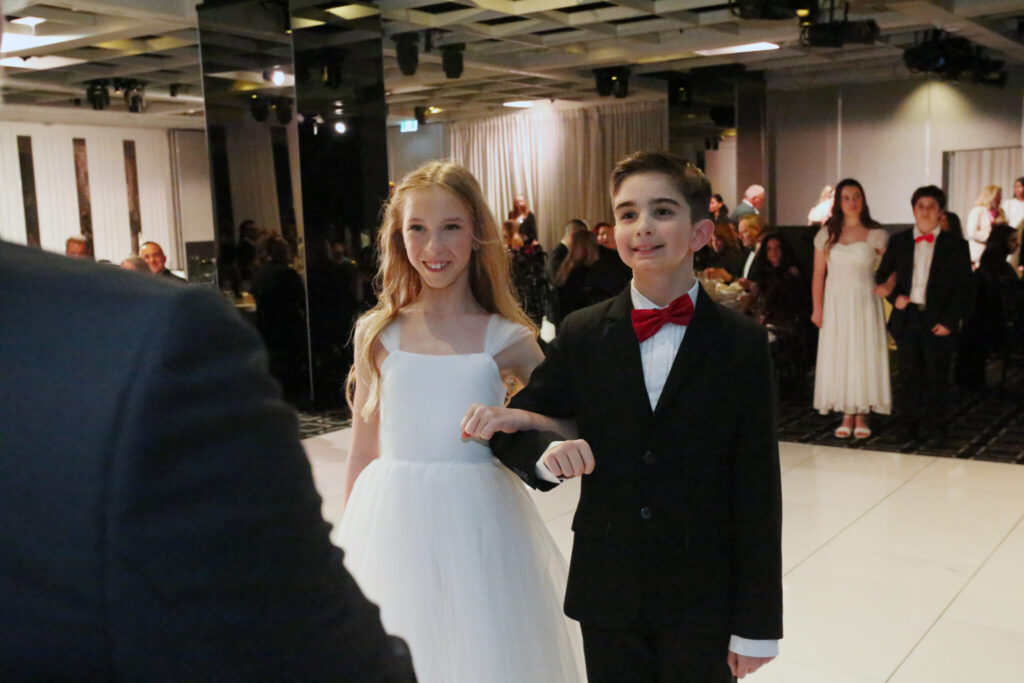
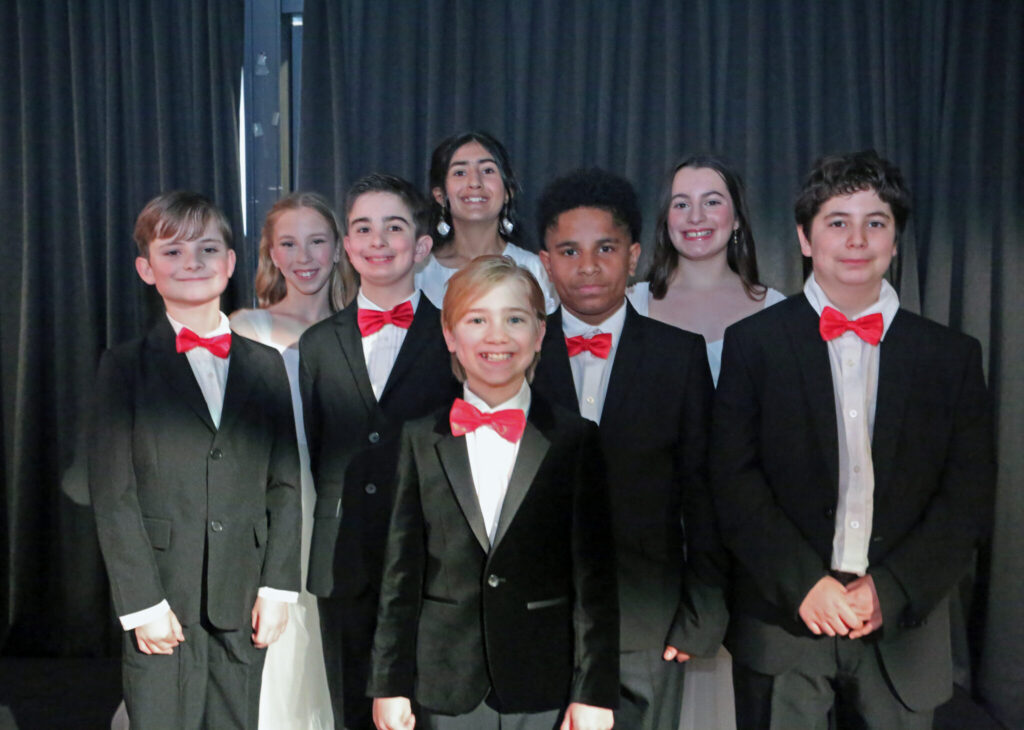
On the final day of term, at the Year 12 Graduation Assembly, we continued the tradition of having some of our youngest students wish the Year 12 graduates well for the future and thank them for their help.
It was an early start for our two Kindergarten students after a late night performing at Starburst, but with the support of their parents they were there to pass on their good wishes. Both children had experienced Year 12 students helping them directly throughout the year. Some of our graduating Year 12 students are Senior Prefects who assist with car park duty and walk our youngest students to class. I often hear snippets of their conversations as they walk together, with the older students asking the younger children about what is happening in their day. Through these seemingly small interactions, our youngest students experience what service, leadership and community actually mean.
Several years ago, I began to understand just how much this small tradition can matter. I remember two former students who had delivered this vote of thanks when they themselves were in Kindergarten. Years later, I watched them stand as Year 12 graduates. One has since graduated from the Victorian College of the Arts Secondary School and is working in the performing arts industry; the other is studying pharmacy. Traditions like this matter. They create connections across generations of students and become part of a much larger learning process.
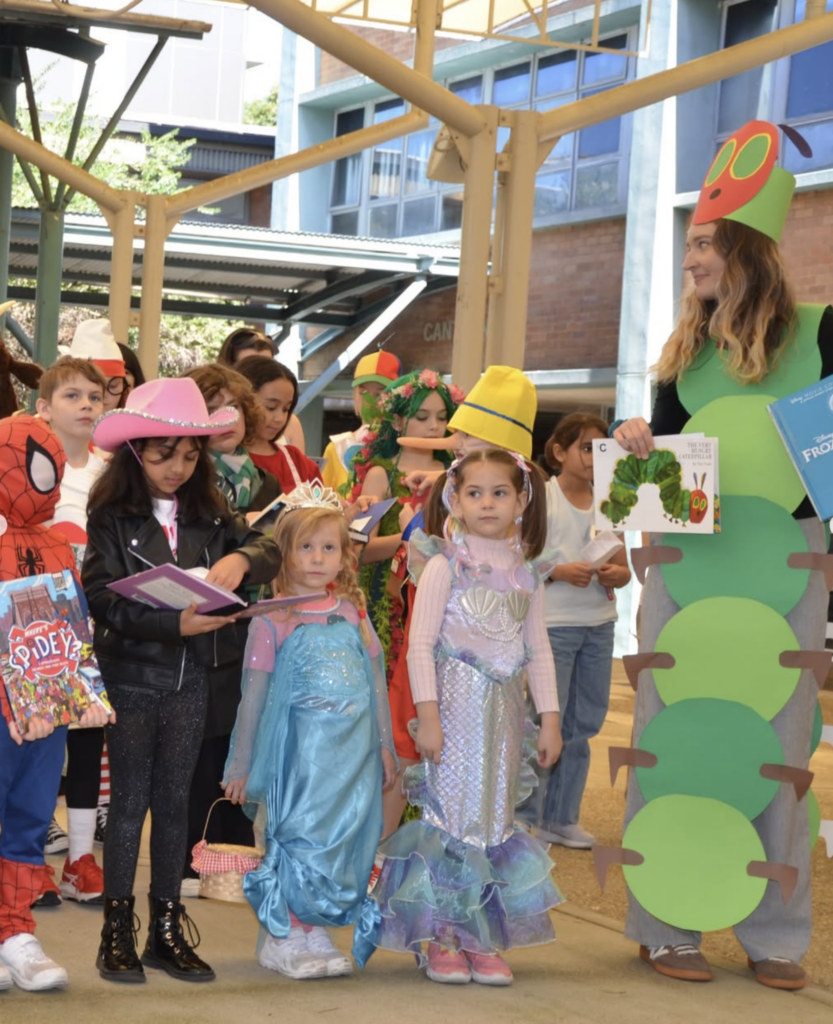
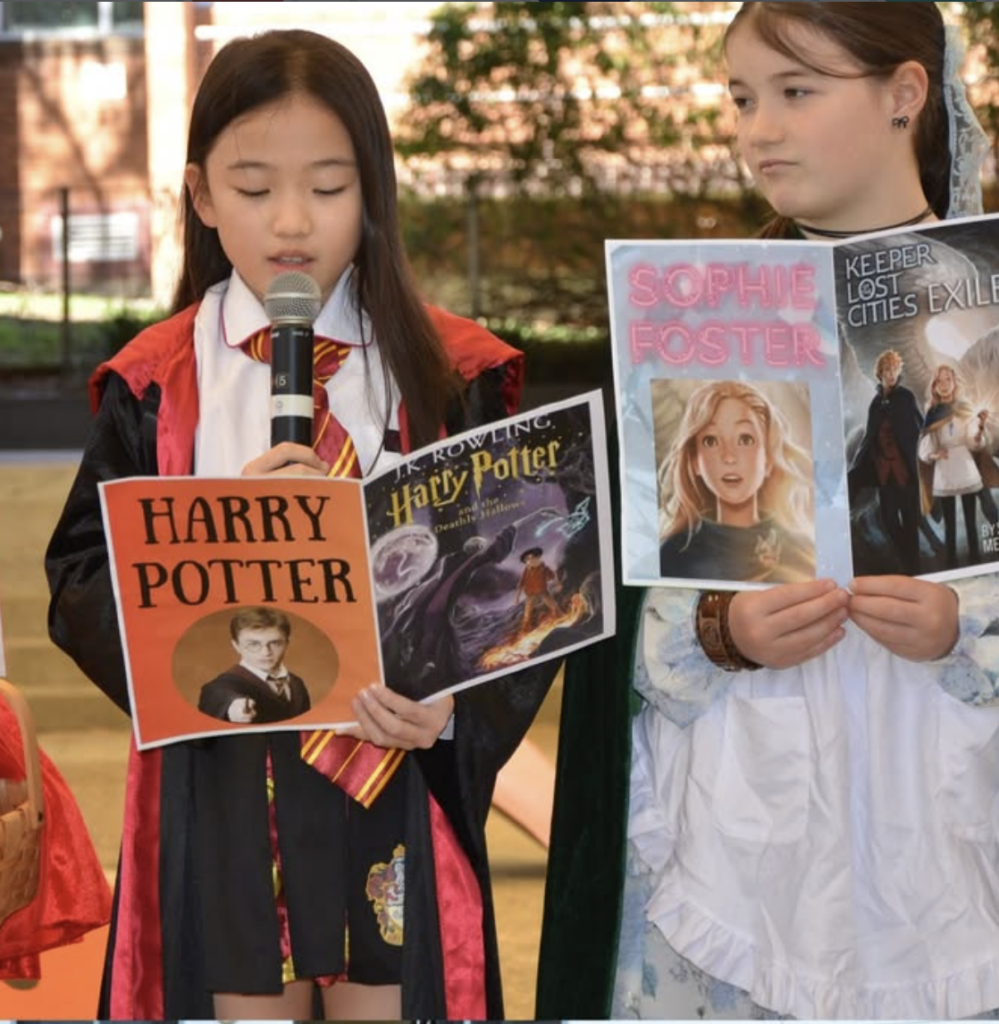
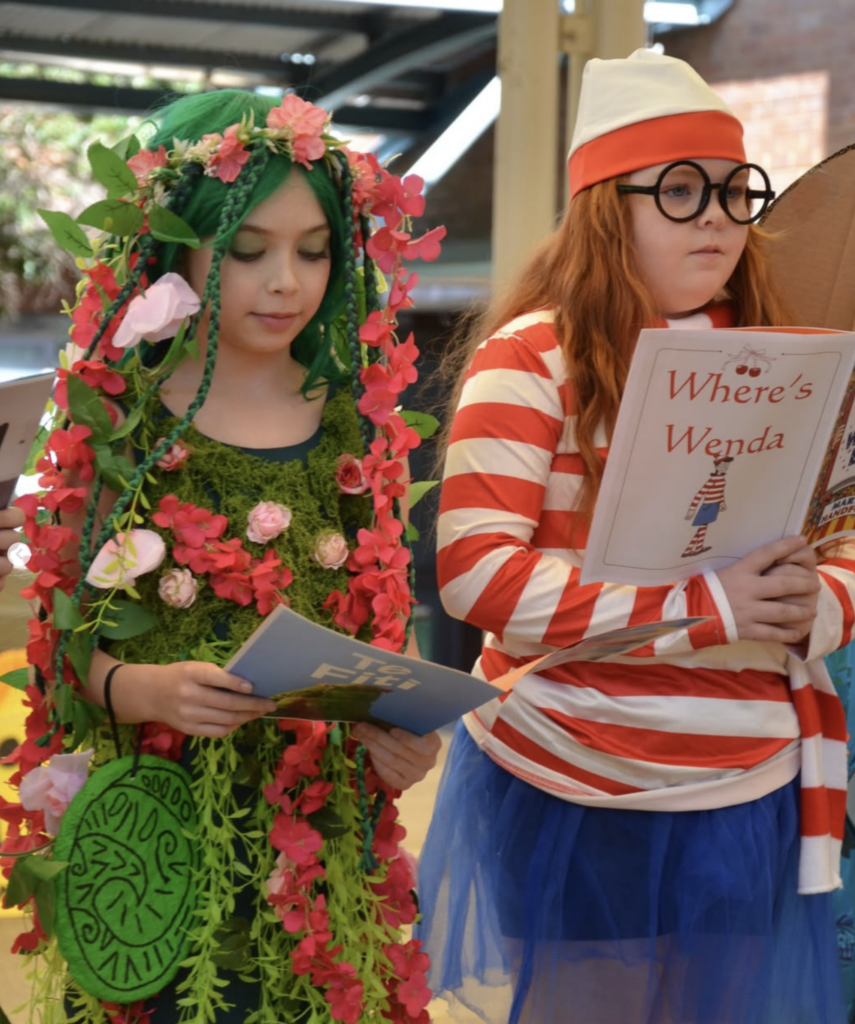
I also reflect on Book Week and our Book Week Parade. Beyond the amazing costumes that parents helped create or source, we had the opportunity to hear every student explain something about their character and why they had made that particular choice. We heard thoughtful decisions, an understanding of character traits and qualities, and genuine enthusiasm for stories and reading.
Not all learning takes place in a classroom. When students board a bus to travel to the Sydney Opera House to experience the Sydney Symphony Orchestra, there is far more learning taking place than simply remembering the names of musical instruments. Experiences build knowledge, curiosity, independence, confidence and connections with the wider world.
During the new student enrolment process, I have the opportunity to meet families considering the College for their children. Recently, I was asked whether, following public discussion about technology use in schools, we intended to ban technology or impose strict time limits on its use in the Junior School.
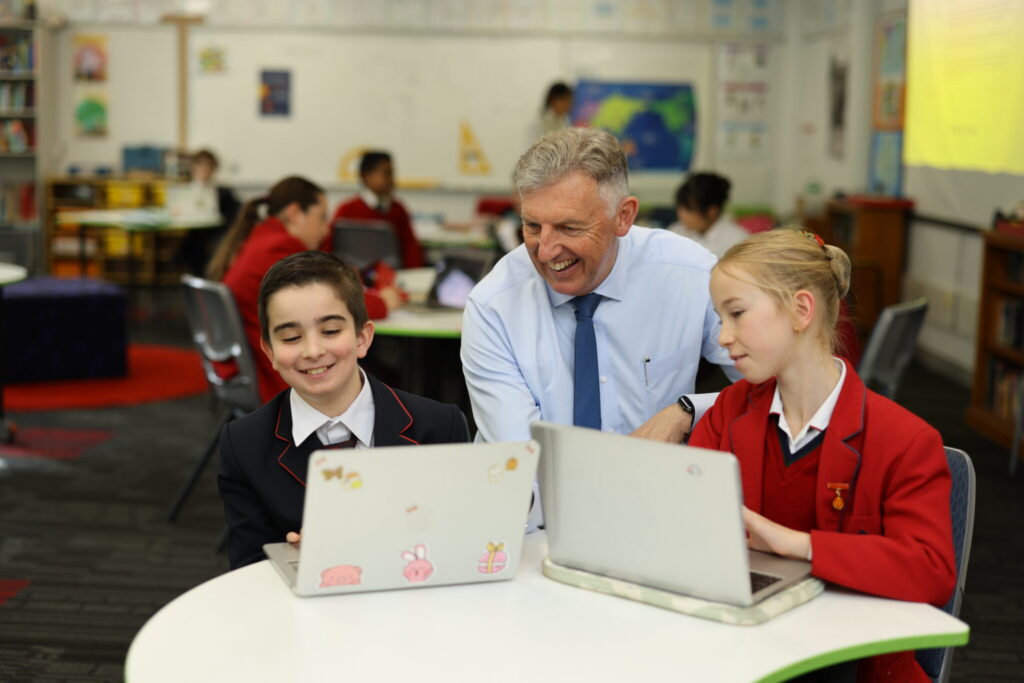
We do not believe that a useful tool should necessarily be banned simply because it can be used poorly. Instead, our responsibility is to use teaching and learning tools thoughtfully and purposefully, making considered decisions about when technology enhances learning and, equally importantly, when it does not.
In Years K–4, the College provides the technology students need. Its use is generally limited and targeted towards a specific learning purpose. At the same time, students continue to develop the essential physical and cognitive skills associated with handwriting, drawing, manipulating materials, communicating with others and working through mathematical strategies.
When teaching a sound group or word pattern, for example, our Kindergarten teacher, Mrs Goold, might use a generative AI tool to create an individualised decodable text incorporating a student’s name or particular interest. The capacity to produce a relevant and engaging resource tailored to an individual learner can be an educational asset. The important question is not simply whether technology has been used, but why it has been used and whether it improves the learning experience.
Whilst Years 5 and 6 students are part of our BYODD program (bringing and managing their own device) we see a balance where the devices are often used as research tools and the students still complete much of their work using physical resources such as wookbooks and other materials.
Recently, while preparing Mathematics work for Year 6, I accessed a textbook looking for practice questions reviewing multiplication and money. I found myself looking at questions requiring students to calculate the cost of petrol at 76 cents per litre. While some of us might fondly remember prices like these, they no longer provide an especially authentic context for today’s students. Generating equivalent questions allowed the mathematical skill to remain unchanged while placing it in a more contemporary context, using realistic fuel prices or even the charging costs associated with an electric vehicle.
The concern that children may become overly dependent on technology and screens is real, valid and worthy of serious consideration. Yet anyone who steps onto a train carriage and notices how many adults are absorbed in their mobile phones quickly realises that this is not solely a classroom or childhood problem.
Our College uses technology for specific and guided purposes, and we have restrictions and expectations in place. Before school, recess and lunchtime are screen-free periods. Students talk, play and interact with their peers without personal devices occupying their attention. It is perhaps worth asking whether we provide the same opportunities at home.
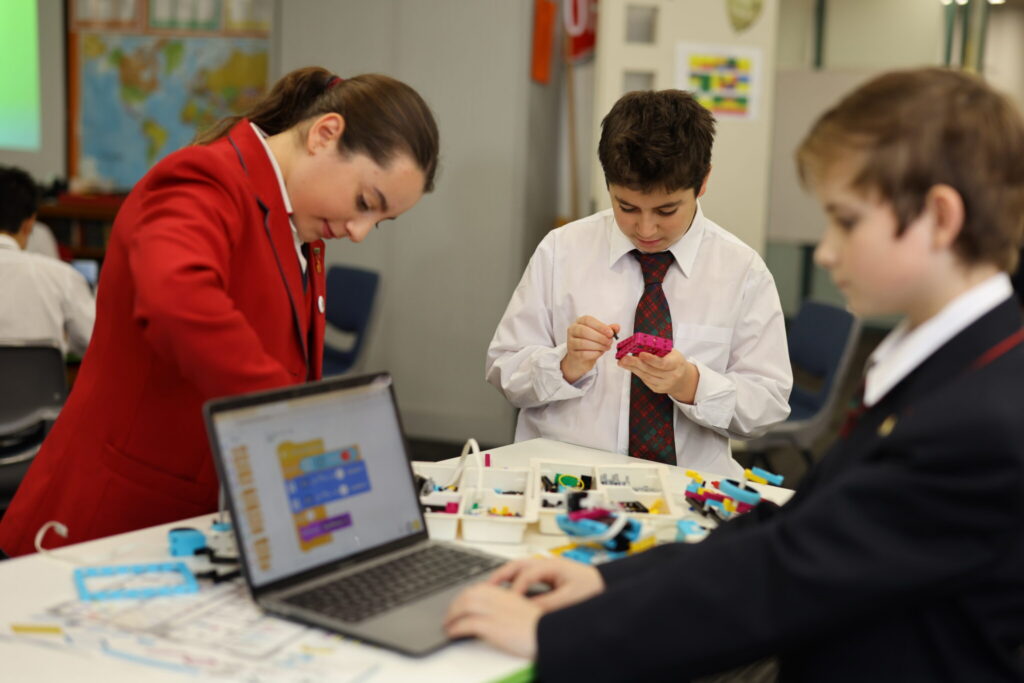
Education has experienced dramatically changing messages about technology. We have moved from enthusiastic discussion of a “digital revolution” and one-to-one devices, to calls for every child to learn coding in preparation for the future, and more recently to concerns that devices should be restricted to protect skills such as handwriting.
These changing positions reinforce the need for careful and considered decision-making. Educational practice should not simply follow the latest enthusiasm or fear. Wherever possible, our decisions should be informed by strong evidence, professional judgement and a clear understanding of what best supports learning.
One initiative the Junior School has embraced because of its strong evidence base is spaced review and retrieval practice.
There is a substantial body of cognitive and educational research supporting learning that is revisited over time, particularly when spacing is combined with active retrieval rather than simply rereading material. Importantly, this is not merely a revision technique to be used before an examination. It can become a normal and deliberate part of classroom teaching.
The principle is relatively straightforward: students are more likely to retain important knowledge when they are required to retrieve it repeatedly over time rather than encountering it intensively once and then moving on.
For example, rather than teaching fractions intensively for several weeks and then leaving the concept untouched until an end-of-term assessment, our Junior School teachers deliberately return to important fraction knowledge and skills over time. A concept might be encountered during the initial lesson, revisited the following day, retrieved again several days later, returned to two weeks later, and then appear again a month later or later in the term.
The important element is that students are asked to retrieve or apply the learning rather than simply look at it again. They might answer a question, explain a concept, solve a problem, complete a diagram from memory, write what they remember or apply previous learning in a different context.
The NSW Department of Education describes review as a planned opportunity for students to bring previous learning back into working memory. Its current guidance recommends that review be planned, scheduled, brief and responsive to student learning. It also emphasises that review becomes particularly powerful when retrieval is spaced over time, drawing on learning from the previous lesson, week, term or even year.
Research into learning and memory supports this approach. Learning encounters distributed over time generally produce stronger long-term retention than the same learning concentrated into a short period. Similarly, actively retrieving knowledge can strengthen a student’s ability to access that knowledge again in the future. Retrieval, therefore, is not simply a means of checking whether learning has occurred; it can itself contribute to learning.
There is also an interesting paradox involved. Spacing learning allows some forgetting to occur. When students subsequently have to work a little harder to reconstruct that knowledge, the act of successful retrieval can strengthen their future access to it. The challenge, however, needs to remain achievable. Effective review should require thought and effort without becoming so difficult that students are unable to experience success. This is why a little difficulty can sometimes be educationally desirable. Consider yourself when you have struggled to remember that name or date and when you finally do remember the detail not only do you feel elation, but you remember it so much better in the future.
If you have a child in the Junior School, ask them about some of the knowledge, concepts or skills they have reviewed this term. You may see them stop and think. You may see them struggle momentarily to retrieve something they know. Then watch the satisfaction when the connection is made and the knowledge returns. That moment matters, it represents something quite different from simply recognising an answer on a page. It is a student discovering that knowledge learned previously is still available to them and can be retrieved, connected and used again.
Term 4 will be upon us remarkably quickly and, although I fear it will not be long before Christmas decorations begin appearing, there is still a great deal of learning ahead of us.
Reflection should not simply be about looking backwards. Its real value lies in using what we have experienced to inform what we do next.
The past term has provided many reminders of what matters in a Junior School: strong relationships, meaningful traditions, opportunities to perform and participate, experiences beyond the classroom, thoughtful use of technology, evidence-informed teaching, and learning that is deliberately revisited so that it lasts.
As we move into the final term of 2026, these experiences provide both a reason to celebrate what has been achieved and a clear foundation for what comes next.
Peter Slattery